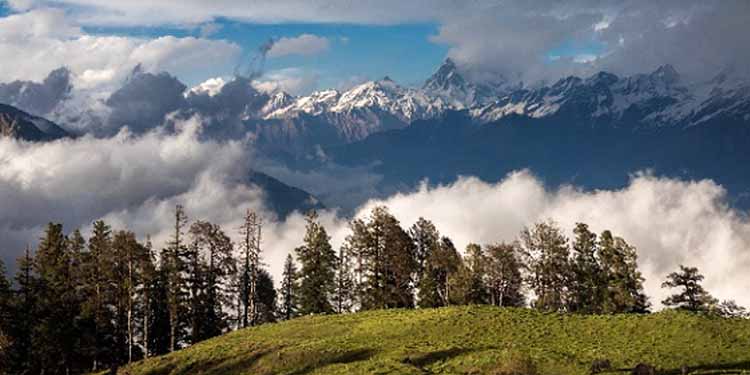
Uttarakhand, a state in northern India crossed by the Himalayas, is known for its Hindu pilgrimage sites.
Beauty is so inherent to almost all things Uttarakhand stands for – the magnanimous Himalayas, the holiest of the rivers, the spiritual mystery, stunning landscapes, the incessantly colorful play of nature, enchanting history carved in ancient stones, a mesmerizing floral and faunal plethora and the simplest of the people. Myths, anecdotes and stories are part of every visual that unfolds itself to the eyes of the beholder.
The age-old Hindu traditions have always accorded highest esteem to the glory of the colossal and composed heights of the Himalayas which are spontaneously assumed to be the chosen consecrated residences of Gods. A whole lot of the Hindu lore sets out from this ‘Land of the Gods’. A description of the charismatic beauty of Uttarakhand would be incomplete without the mention of people who inhabit this blessed country – simple, willing to help and hardworking people of the state are as diversified as the elements of nature. Several indigenous tribal groups peacefully co-exist with others, simultaneously keeping their distinct cultures alive. Apart from being a unique tourism destination, Uttarakhand is a goldmine for anthropologists, historians, ornithologists, linguists, geologists … you name the discipline and the state has something on offer.
Almora
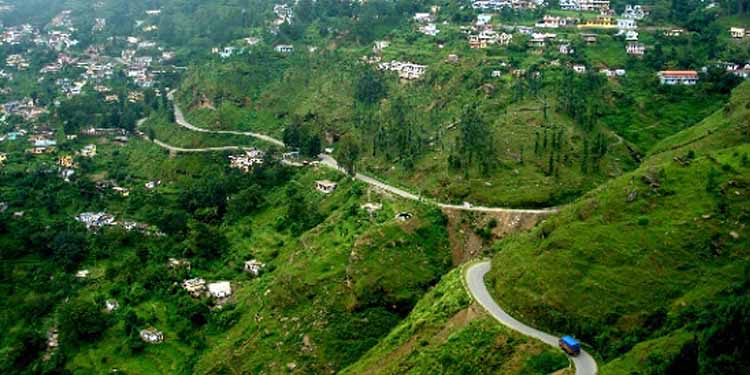
Almora is famous for its wildlife, culture and cuisines; the hill town is located in the Kumaon region of Uttarakhand state. The town shaped like a horseshoe boasts its pre-colonial heritage and an idyllic vibe. It is bound by thick forests of pine and fir trees and was visited many times by Mahatma Gandhi and Swami Vivekananda who have mentioned Almora in their writings. The town is famously known as the town of temples and two major rivers Koshi (Kaushaki) and Suyal (Salmali) that flow through this region. Nanda Devi Temple is the cultural and religious centre of Almora now for hundreds of years and Lala Bazar is a market that is more than two hundred years old, with paved stone streets.
Auli
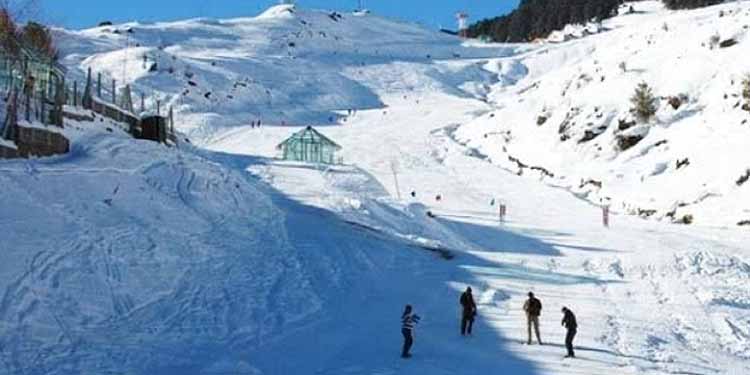
Flanked by coniferous and oak forest slopes, Auli offers wonderful views of the surroundings. Auli is one of those less explored hill stations of India; and also having magnificent skiing facilities. Perched at a suitable height on the lap of the Nanda Devi and Mana parbat peaks, with snow covered peaks half of the year, Auli proves to be apt location for the adventurous. The beauty of the hill station enhances with each passing day and in winters the snow covered peaks give a wonderful aura to the place. The best time to visit this place depends from person to person, and the adventurous would prefer to visit this place only in winters. Natural slopes and the normally a clear bright sunny sky that are ideal for skiing are present in Auli, hence it’s fast becoming the favorite of skiers.
Badrinath
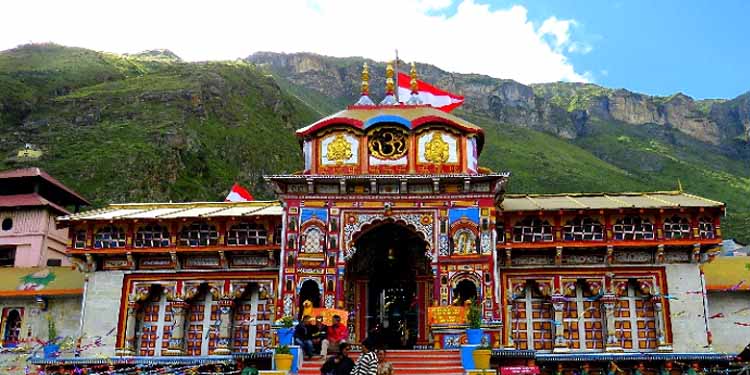
Badrinath is one of the four Dhams; a devout Hindu has to visit in his lifetime to attain salvation. One of Hinduism's holiest sites, it was founded by Sri Shankaracharya, in the ninth century. The temple, also known as Badri Narayan, is dedicated to Vishnu, who is said to have done penance in the mythical Brindavan that once covered the mountains of Uttarakhand. Known as 'Tapobhumi', a land of meditation and penance, and 'Bhubaikunth', heaven on earth, it is surrounded on either side, by two mountain ranges known as Nar and Narayan, with the Neelkanth peak, providing a spectacular backdrop Facing the Badrinath temple is a hot water spring, known as 'Tapt Kund'.
Corbett
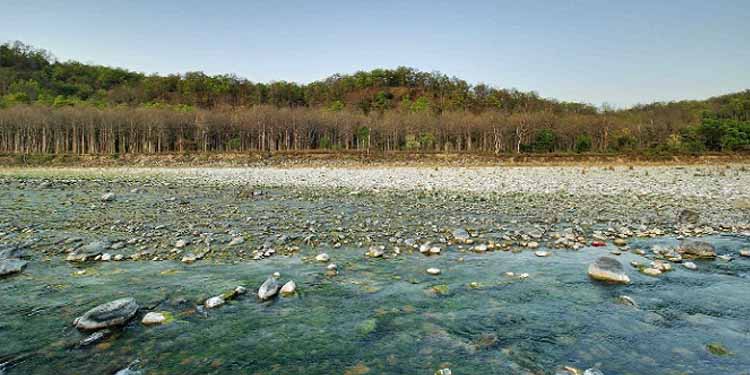
The Jim Corbett national park, pride of India and one of the first protected Tiger Sanctuary of India. Named after the great nature lover and hunter, Jim Corbett, this vast park has about 520Sq kms of core area. Situated in the Kumaon and Nainital districts in the hilly and picturesque state of Uttaranchal, this was the place where the project Tiger was first launched in 1973. Jim Corbett, a British who was born and brought up in the hills of Kumaon, mingled with the locales of the area unlike other British. Jim Corbett grew up to become an army personnel to support his family and later was summoned of and on by the local villagers to kill the man eating tigers and leopards in the area. Covered by Sal trees and the grasslands and bamboo growth, the habitat is perfect for the a list of species found in this area. There are around 582 species of birds, 26 species of reptiles, 7 species of amphibians and 50 species of mammals. The floral diversity is also extremely varied. The park has a high density of tiger population which it is most famous for.
Dehradun
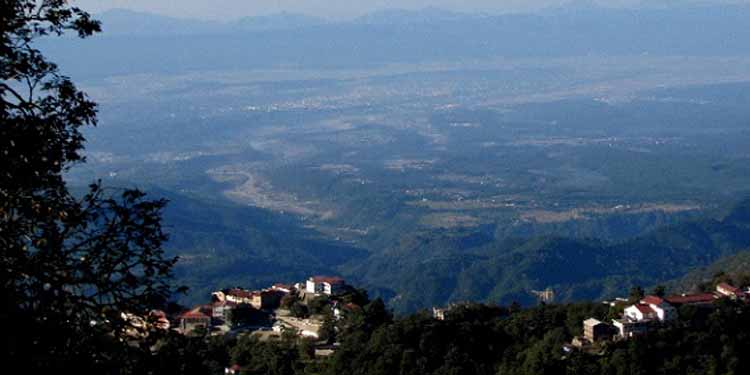
Dehradun is the Capital of Uttaranchal. It is one of the most beautiful resorts in the sub mountain tracts of India, known for its scenic surroundings. The town lies in the Dun Valley, on the watershed of the Ganga and Yamuna rivers. The name Dehradun is a collection of two-word "dera" meaning Camp and " dun" meaning valley. Some of the best public schools and convents are housed here. The Indian Military Academy, The Forest Research Institute, ONGC and many more offices of Central and State Govt. are also situated here.
Gangotri
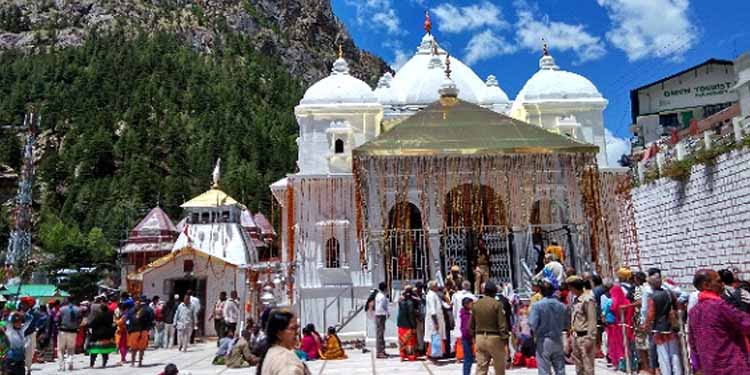
Gangotri, the beautiful religious site for the Hindus, is the best place for various adventure sports as well. This ancient place has a mythological importance attached to it thus making it one of the most sacred places for the pilgrims. It is actually the place, which is the source glacier of the biggest, and the most sacred rivers of India, the Ganga. According to the legend, King Bhagirath wanted to bring the great river Ganga from the heavens to the earth to wash the sins of his predecessors. After a great penance Lord Shiva was pleased and on his behest Ganga came rushing down, but had she come with her full force the earth would have been devastated, therefore the initial force was taken in Lord Shiva's matted hair locks and then the great River came down. At that point the Ganga is known as Bhagirathi. A temple was erected here by Amarsingh Thapa, a Gorkha command in the Garhwal region in the 18th century.
Haridwar
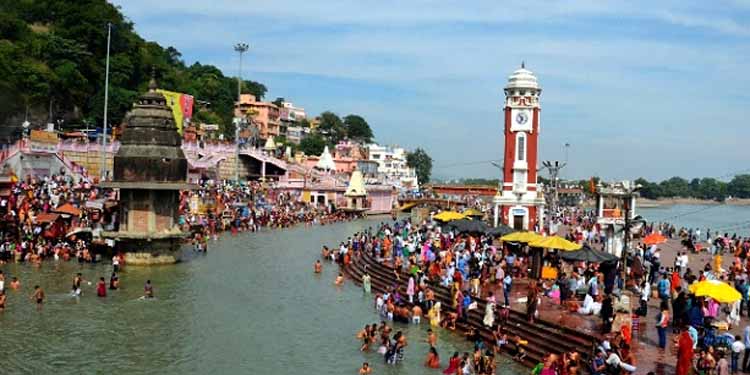
Haridwar is at the point where the river spreads over the northern plain. It lies at the base of the Shivalik Hills where the Ganga passes through its last gorge and begins a 2000 km journey across the plains. One of the four venues for the Kumbh Mela held once in twelve years, it is among the seven sacred cities of India. Legend: A footprint, claimed to be Vishnu's, exists on the bank of the holy river giving Haridwar (Vishnu's gate) its sanctity. Therefore the holy dip at Har-Ki-Pairi is a must for every devotee. Situated at the confluence of the rivers, Chandrabhaga and Ganga, Rishikesh has long been a spiritual centre.
Joshimath
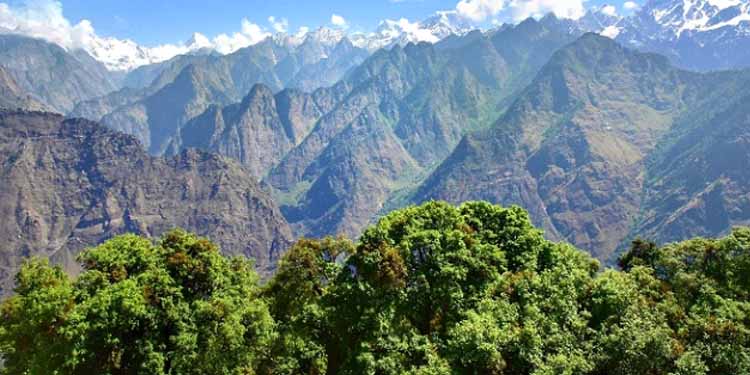
Joshimath is probably the corruption of the word Jyotirmath, pertaining to the Jyotirlinga that is present in the area. Joshimath is an important destination on this sector as it has many religious and beautiful places in its proximity. The religious places like the Gangotri, Yamunotri, Rishikesh Badrinath and many other religious places are nearby. Another importance of this place is that is comes under the trekking route to the natural wonder of the valley of flowers. Joshimath itself is an important pilgrimage site as the great Hindu saint Adi Shankaracharya visited this place in the 8th century and also h as built a temple here. Situated on the slopes above the confluence of Alaknanda and Dhauliganga, Joshimath offers spectacular views of the Himalayas and the gushing rivers flowing by.
Kausani
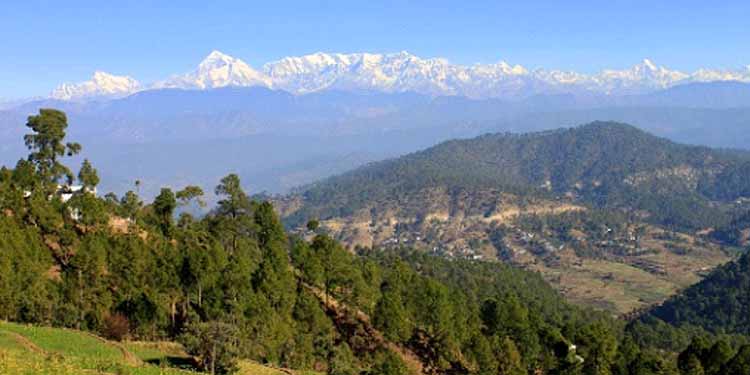
Kausani is the ideal place to have a spectacular view of the Himalayas from the Kumaon Hills of Uttaranchal. This small sleepy town is often referred to as the Switzerland of Uttaranchal and is the birthplace of the famous poet Sumitra Nandan Pant. Some places from Kausani give the maximum and spectacular view of the Himalayas. The peaks surrounded with dense forests and verdant luxury of nature seems to be competing with each other to ouch the sky, rising above the landscape. Apart from the natural beauty this small town has many places of tourist interest here. Baijnath, Someshwar and Pinakeshwar are the religious places, which can be included in the visits. Kausani offers many treks deep into the forests to explore the nature's beauty on foot. The place experiences a beautiful climate throughout the year except for heavy showers from Mid-July to September and two months of snowfall in December and January.
Kedarnath
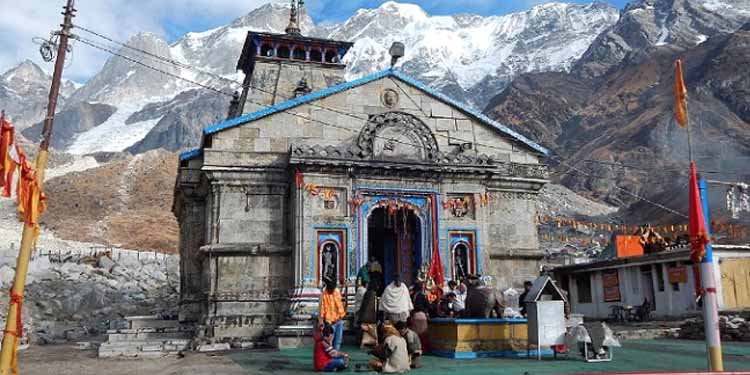
Kedarnath is the most important Hindu shrine in Himalayas, and among the major Shiva temples, of the country. Located at the source of the river Mandakini, Kedarnath is one of the twelve Jyothirlingas, of Lord Shiva, and one of the Panch Kedars. Mythology identifies the deity at Kedarnath temple, with the rump of a bull, a form assumed by Lord Shiva, when eluding the Pandavas, who had come for repentance for killing their kith and kin, in the great battle of Kurukshetra. It is believed that the Pandavas constructed the temple of Kedarnath. At the entrance of the temple, is the statue of Nandi, the divine bull of Shiva. The wall inside the temple is exquisitely carved with images, and the temple houses a shiva lingam, which is worshipped by hordes of pilgrims. At the approach of winters in the month of November, the holy statue of Lord Shiva, is carried down from Garhwal (Kedarkhand) to Ukhimath, and is reinstated at Kedarnath, in the first week of May. It is at this time, that the doors of the temple are thrown open to pilgrims, who flock from all parts of India, for a holy pilgrimage.
Mukteshwar
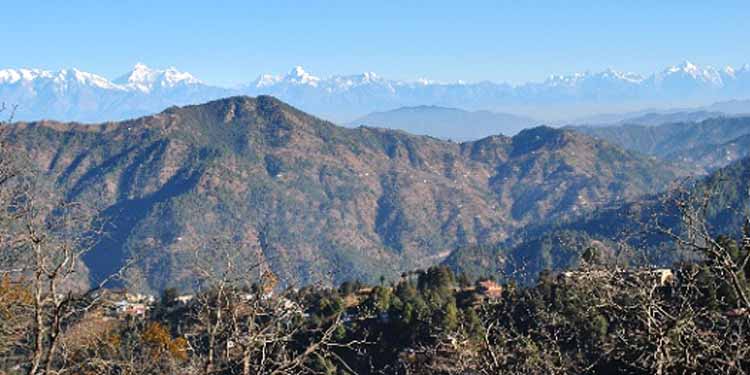
Mukteshwar, a small town at 8000 feet above the sea level and just 50 odd kms from Nainital, is the best place to give one the most needed break from the hustle and bustle of the city life. Surrounded by fruit orchards and coniferous forests, it offers a splendid view of the Himalayas and the sunset. It is also famous for the century old Shiva temple, Chauthijali rock formations and Angora wool products.
Mussoorie
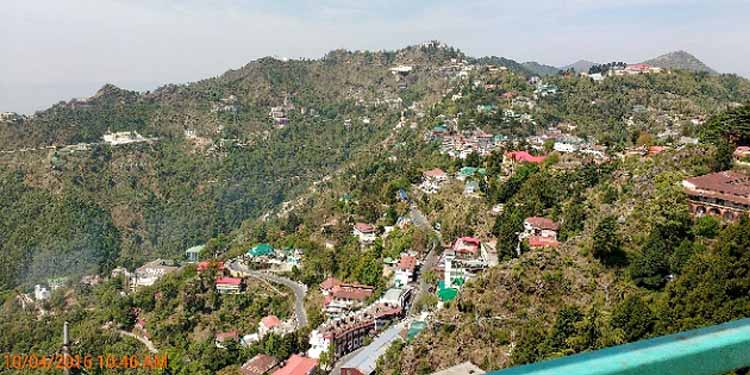
The queen of hill stations is about 89 km from Haridwar and the salubrious climate and deep woods make it an ideal hill station. The name, Mussoorie, derives its name from plants of 'Mussoorie', found in abundance here. After its discovery, this place gradually developed as a center of education, business, tourism and beauty. The hill station of Mussoorie came into being around the 1830s. What began as a small settlement grew into a large station to turn into a hill station of today overlooking the sprawling Doon valley and the city of Dehradun. Mussoorie was not named after a place in England. The British were content to follow the name given by the hill-folk. Mussoorie, at a height of around 7000 ft above the sea level, straddles a ridge in the Garhwal Himalayas, developing into a major tourism destination.
Nainital
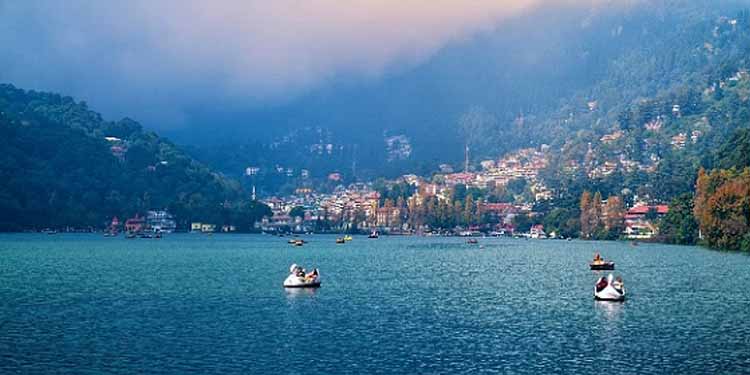
Mr. P. Barron, a European merchant and an enthusiastic hunter from Rosa, near Shahjahanpur, founded "NAINITAL" in the year 1841. Mr. P. Barron was the first European who took great fancy to this land. Moved by the beauty of the sparkling lake he wrote: "It is by far the best site I have witnessed in the course of a 1,500 miles trek in the Himalayas." It is very less is known about the history of Nainital. This region was called Khasdesh in ancient times and Khasis ruled this region before Christ was born. The name "NAINI" is derived from a temple to the goddess 'Naini Devi" built on the upper edge of the lake and was destroyed by the landslip of 1880. It was subsequently replaced by a modern structure. The word "Naini" means 'Eyes' and 'Tal' means 'Lake'.
Ranikhet
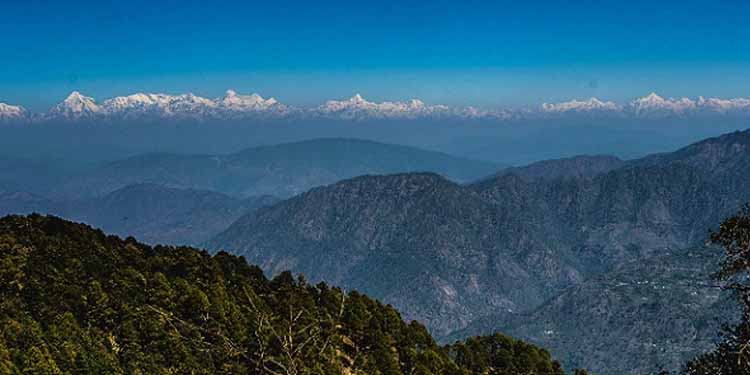
It is believed that the hill resort of Ranikhet derives it name from the Rani Padmini, queen of Raja Sukherdev, the local ruler. The queen was awe-struck by the beauty of the place. The queen was so captivated by the place that she decided to stay there, and the place came to be known as Ranikhet i.e. the queen's field. The region around Ranikhet was ruled by local Kumaoni rulers and later came under British rule. The British developed Ranikhet as a hill station for their troops and established a cantonment in 1869. Ranikhet is still a cantonment town and is the Kumaon Regimental Center. Till date the hill resort of Ranikhet offers refugee to the sun baked people of the plains.
Rishikesh
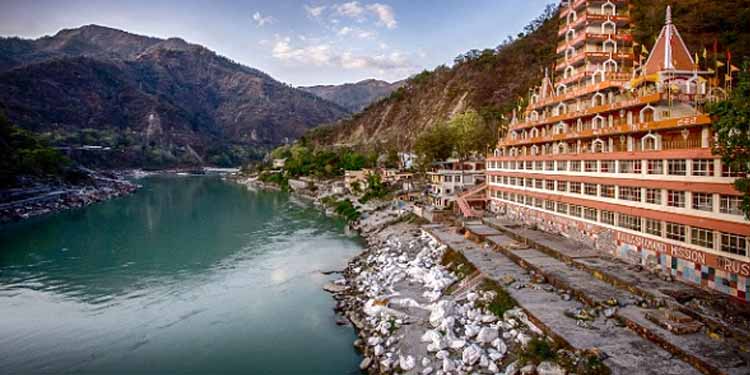
Legend has it that the sage Raibhya Rishi did severe penance and, as a reward, God appeared to him in the form of Rishikesh. Rishikesh also represents the site where Lord Vishnu vanquished the demon Madhu. The place is known as the Tapo Bhumi or the place for meditation of the Gods. Tapovan, on the other bank of the Ganges, houses a temple to Lakshmana. It is believed that Lakshmana, the younger brother of Lord Rama, carried out penances here. The Neelkanth Mahadev temple is believed to be the site where Lord Shiva had drunk the venom that came out during the churning of the ocean. In the 1960s, the place came into limelight as the place where the pop group Beatles met their guru, Maharishi Mahesh Yogi.
Yamunotri
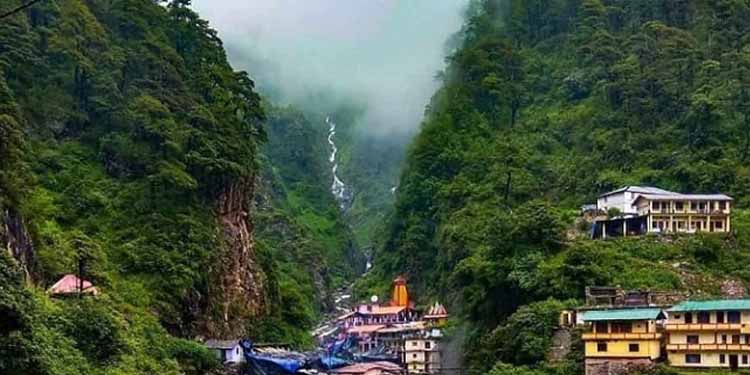
One of the four sacred dhams of Uttarakhand, and revered in Hindu mythology, Yamunotri is the source of the river Yamuna. About 220 Km from Rishikesh and 149 Km from Tehri, the picturesque shrine of Yamunotri is located at an altitude of 3,235 m. being one of the four Char dhams it is a place of paramount religious im ce for the devout Hindus. The 19th century temple of Goddess Yamuna, a number of thermal springs and Divya Shila (Rock pillar) are prime attractions. Moreover, the place is full with scenic spot and panoramic views of Himalayas.
Pithoragarh
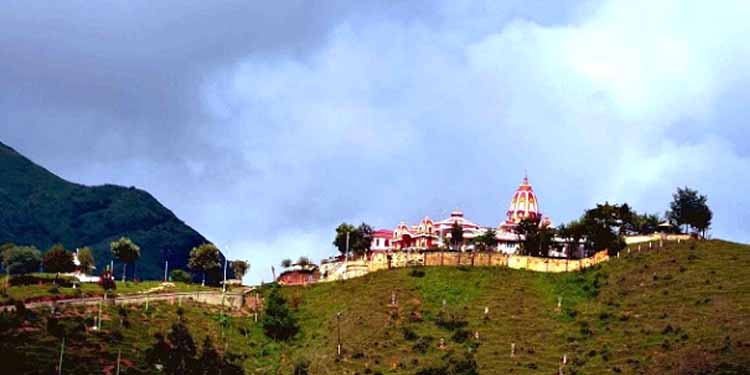
Nestling in a small valley 5kms. long and 2kms. wide, the town of Pithoragarh was an important landmark of the chand Rajas of kumaon and was known as soar valley. Pithoragarh is a treasure house for visitors, mountaineers, botanists & religious minded tourists. The Mansarovar Yatra route is a delight for trekkers and adventure seekers. Many rivers originate from the lofty pithoragarh mountains, thus providing ample scope of water sports. The dense forests around have a wide range of wild flowers & animals including peacocks, elephants, tiger, musk deers and snow leopards. The charming & colourful people of Pithoragarh celebrate all festivals and religious ceremonies with great fanfare & devotion.
Munsiyari
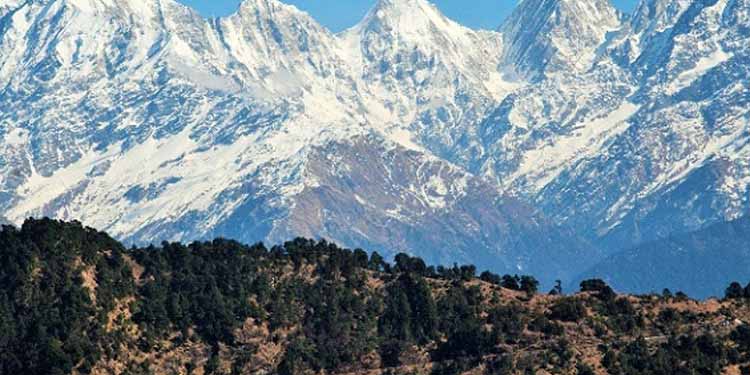
There are a few places in the world that defy description. You only have to get there to experience their uniqueness. Munsyari is one such place. Hidden away amongst the mountains in India's border district of Pithoragarh at a height of 7000 feet Munsyari is probably the closest you can get to experiencing the Greater Himalayas from hand shaking distance. At Munsyari you have the majestic Panch Chulli peak towering all of 22600 feet right in front of you. Amidst virgin forests, fabulous snow laden mountains and countless glacial springs the small town of Munsyari is the gateway to the famous Milam and Ralam glaciers. Munsyari is also your only access to one of India's highest mountain - Nanda Devi East (7434 mts).
Best of Kumaon – 6Nights/7Days
Delhi – Nainital – Kausani/Ranikhet/Mukteshwar – Corbett – Delhi
Day 01: Delhi – Nainital / Bhimtal (345kms/8hrs Drive)
Arrival at Delhi & take a transfer to Nainital by road. Nainital is famous for lakes especially naini jheel(lake), hence nainital is also known as ‘lake district’ of India. Nainital is situated in a valley that contains pear shaped lake, approximately two miles in circumference and surrounded by mountains. Arrival & check in.
Day 02: Nainital Sightseeing
Local sightseeing of Nainital including visit to Naina Devi Temple, Kilbury view Point, Nainital Zoo, Enjoy a wonderful cable car ride (optional), & Mall Road – It is a point of union between Mallital with Tallital that makes it the busiest places in Nainital especially during peak seasons.
Day 03: Nainital Sightseeing/excursion
Today, you can visit nearby places like Bhimtal Tal & Navkuchiya Tal, it is the deepest and by far the most picturesque lake in the Kumaon region and derives its name from the nine corners which came together to form it. Naini Lake – Ringed by seven hills, the emerald colored waters of the lake attracts hordes of tourists during the day who come to try their hand at yatching, rowing or paddling on the lake.
Day 04: Nainital To Kausani (115kms/3-4hrs Drive)
Check out & transfer to Kausani / Ranikhet. Kausani is a celebrated site for its panoramic exquisiteness and views of enchanting Himalayas. Ranikhet Hill Station or “Queen’s Meadow” is a mesmerizing place falling under the state of Uttaranchal. Arrival & check in. Evening at leisure.
Day 05: Kausani / Ranikhet
Visit some of the view-points around Kausani – is famous for it’s breathtakingly close view of the Himalayan Peaks and it’s solitudes and greenery. Ranikhet- KRC Museum and Golf Course – Kumaon Regiment of Indian Army is perhaps one of the most prestigious and the most decorated of all. The KRC Golf Course is another delight for Golf lovers. Chaubatia Gardens- Chaubatiya gardens are famous for their sprawling orchards of delicious apples, plums, peaches and apricots.
Day 06: Kausani To Corbett (155kms/4-5hrs Drive)
Check out early & transfer to Corbett. Corbett has been a haunt for tourists and wildlife lovers for a long time. Mainly known for its successful tiger conservation project, Corbett is home of great variety of wildlife creatures.
Day 07: Corbett To Delhi (275kms/5-6hrs Drive)
Check out early morning & take a transfer to New Delhi. Arrival at New Delhi Airport / Railway Station & the tour concludes.
Mussoorie Hills & Rivers – 5Nights/6Days
Dehradun – Rishikesh/Haridwar – Mussoorie – Dehradun
Day 01:Dehradun Airport to Rishikesh (50Kms/1-2Hrs Drive)
Arrival in Dehradun Airport & depart to Rishikesh. Rishikesh is a city in India’s northern state of Uttarakhand, in the Himalayan foothills beside the Ganges River.
Arrival in Rishikesh & check in to your hotel.
Day 02: Rishikesh local / Haridwar Excursion
After lunch break excursion to Haridwar (25Kms/1Hrs one way). Haridwar, literally Gateway to God, is one of the Hindu holy places in India and a center of Hindu religion and mysticism for centuries.
Back to Rishikesh & overnight.
Day 03:Rishikesh
Day free for adventure activities in Rishikesh for River Rafting & other watersports activities.
Day 04:Rishikesh to Mussoorie (80Kms / 2-3Hrs Drive)
After breakfast check out & Drive to Mussorie. Mussoorie - is called the Queen among the hill stations. It overlooks the sprawling Doon valley and the city of Dehradun, the gateway to Mussoorie and infact to the entire Garhwal. Arrival at Mussoorie & check in to your hotel. Day free at leisure.
Day 05:Mussoorie local sightseeing
Half-day excursion to Kempty Falls - 15 km from Mussoorie on the Yamnotri Road at an altitude of 4500Ft. Evening Gun Hill viewpoint & Ropeway Ride is also available to this second highest peak of Mussoorie.
Kanatal / Chamba / Dhanaulti (Excursions from Mussoorie) if wants to visit
Chamba at the doorstep of this heaven, on the foothills of the Himalayas lies Chamba. Unexplored, untouched, overlooking the snow-clad peaks on one side and offering a magnificent view of the valley on the other, about 60 km from Mussoorie is the small hill town of Chamba, Uttarakhand.
Dhanaulti is a small town near Mussoorie, beautifully nestled amid the lofty Himalayan peaks. It can be a destination in itself, but it’s more of a serene pit stop for travelers heading for longer journeys or a leisure Uttarakhand holiday.
Kanatal is a small village in the state of Uttarakhand, India. Kanatal is 78 km from Dehradun, 45Kms from Mussoorie and 12 km from Chamba. This town is located in a very scenic setting surrounding by mountains and rivers, with breathtaking views and scenery.
Day 06: Depart to Dehradun Airport (40Kms/1-2Hrs Drive)
Morning check out & depart for Dehradun Airport to board your flight to Mumbai & tour ends with the sweet memories.