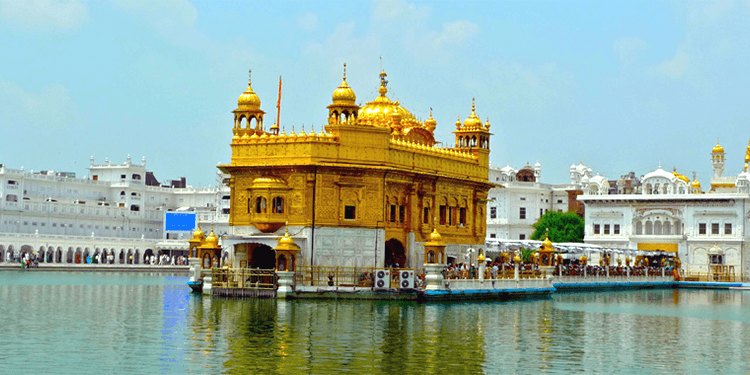
Deriving its name from five full-bodied rivers–Sutlej, Beas, Ravi, Jhelum, and Chenab–which flow through its vast plains, Punjab is representative of abundant things. Located on the north-western edge of India, it is one of the smaller albeit prosperous states of the nation, and home to a lively, hospitable and dynamic people. Widely acknowledged as the cradle of civilization, it is a land of ethnic and religious diversity, having borne and shaped a number of religious movements that include Sikhism, Buddhism and Sufism. The Punjabi language, too, finds its origin in the Indo-European linguistic family that includes Persian and Latin. Naturally replete with fertile soils and rich water sources, it is primarily an agricultural state, and has continually and infinitely contributed towards the food security of the Indian Republic. Punjab’s many festivals–Teej, Lohri, Basant, and Baisakhi, to name some–are celebrations that mirror the farming ethos. Indeed, Bhangra, the traditional dance of Punjab revolves around, and replicates a farmer’s daily life. Historically, Punjab has played host to a number of ethnicities, including the Aryans, Persians, Greeks, Afghans and Mongols, thus bestowed with a rich tangible heritage. Reflecting this history are the countless sites that dot the state: impressive forts & palaces, ancient monuments, architectural marvels and many a battlefield.
Amritsar
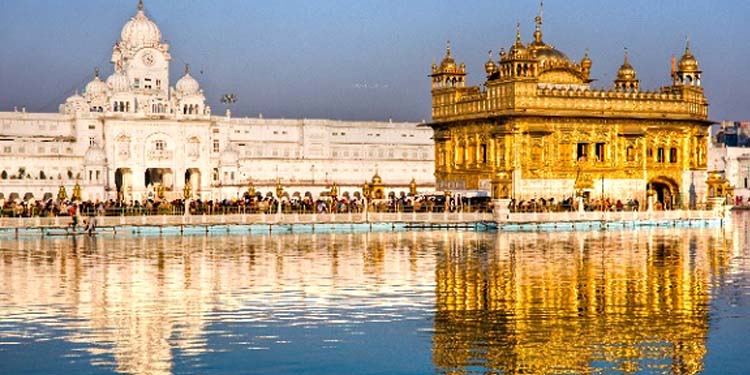
One of the most ancient and fascinating cities of India, Amritsar is one city of India which has witnessed the worst and the best in recent years. Literally meaning the Pool of Nectar, Amritsar was founded by the Sikh Guru, Guru Ram Das. From a sacred village pond into a spiritual temporal centre of Sikh culture, Amritsar is the soul of Punjab. This ancient city has seen and witnessed many a turbulances over the past 400 years. It has the Akal Takht, or the seat of Almighty in the pious Golden temple. Be it the demolition of the Akal Takht by the Afghan rulers or the donations by the Mughal Kings to restore it; or be it the massacre of the Jallianwala bagh or the riots during partition. Amritsar has experienced the worst and come out of it as though the Phoenix, becoming one of the major agricultures producing cities of India. Today Amritsar is a city thriving with business and tourism.
Chandigarh
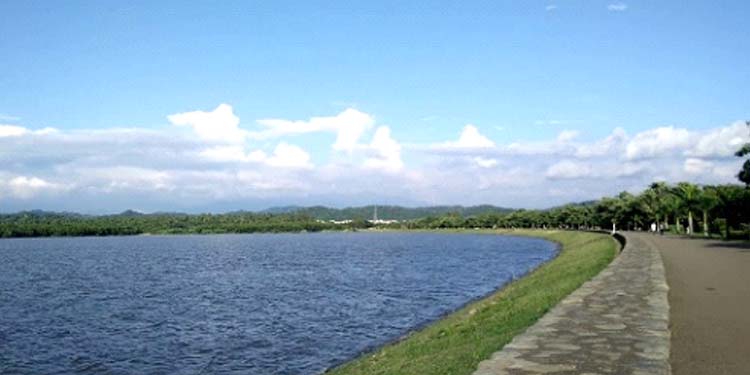
Chandigarh, the present capital city of the States of both Punjab and Haryana is the first planned city of India. However, it does not belong to either of the States. It is a Union Territory, administered by the Government of India. The city is very modern and has derived its name from a temple on the slope of the Sivalik hill, Chandi Mandir (deity Chandi, goddess of power), and a fort or "garh" beyond the temple, called Chandigarh.