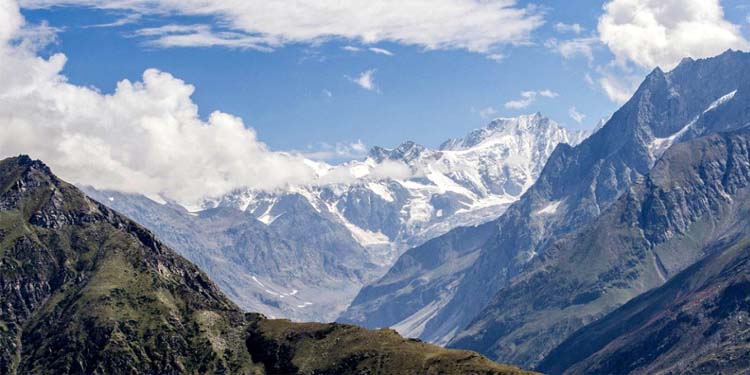
As the name connotes ('Him' means snow), it is a land of snow-clad mountains, snow-fed rivers and sparkling streams, the beauty of which has lured many to this enchanting place. Himachal Pradesh is a hallowed land, a land of gods, goddesses and saints. Religion is the bed-rock on which the culture, arts and crafts of this state are founded. This is more than evident in the numerous Hindu and Buddhist shrines and monasteries, where the people of Himachal have surpassed in stone and woodcarvings. Nestled in the Himalayas, the world's mightiest mountain ranges, Himachal is blessed with some of the most spectacular landscapes anywhere. Truly a travelers paradise, with mighty snow peaks, deep gorges, lush green and golden valleys, flower filled meadows, misty woods, fast flowing icy rivers, glaciers and enchanting lakes. While the picturesque valleys of Kullu, Kinnaur and Kangra are a riot of colours, in marked contrast the barren terrain of Lahaul & Spiti have a stunning lunar landscape like beauty. There are also tremendous opportunities for trekking, mountaineering, fishing, river rafting, skiing, para-gliding, ice skating and golf.
Parwanoo
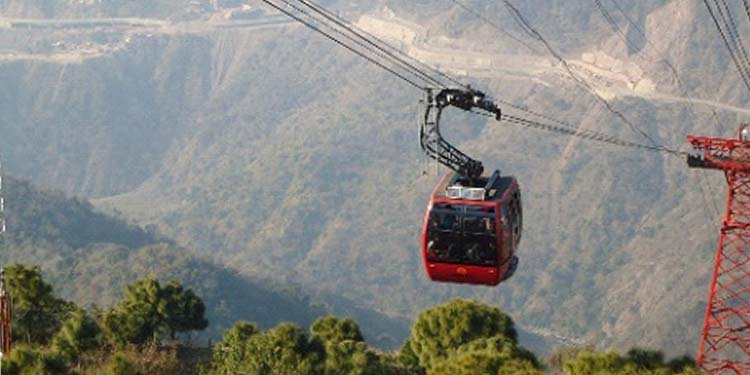
Along the National Highway No.22, as one cross the state border of Haryana into Himachal, there comes the town of Parwanoo. A couple of decades ago, this was a sleepy little village but today, it is a pulsating industrial town. Fruit based products, plastics, motor parts and watch components roll out of Parwanoo's factories. For a tourist, Parwanoo is a convenient base station to see and visit several nearby areas.
Shimla
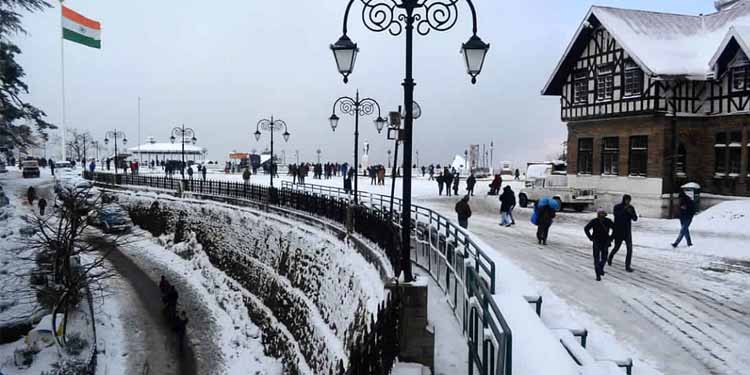
A quaint little hill train chugs up into the Shivalik foothills, over dramatic loops and high arched bridges to the hill resort of Shimla (2130 m) - the capital of the mountain state of Himachal. Shimla was one a string of hill stations that the British established to escape from the scorching heat of the plains. The 12 km, crescent shaped ridge on which it is located was first occupied by the British troops, in the early part of the 19th century, during the Anglo-Gurkha War. The little village of Shymala, a retreat for British officers, soon grew to become the glamorous summer capital of the British, in India.Shimla's salubrious climate, easy accessibility and numerous attractions have made it one of the most popular hill stations in northern India. The splendid views of the show-clad ranges of the Himalayas, fine walks through oak and flowering rhododendron, enchanting resorts within easy reach, golf Naldehra and skiing at Kufri and Narkanda make Shimala an attractive destination throughout the year.
Kullu-Manali
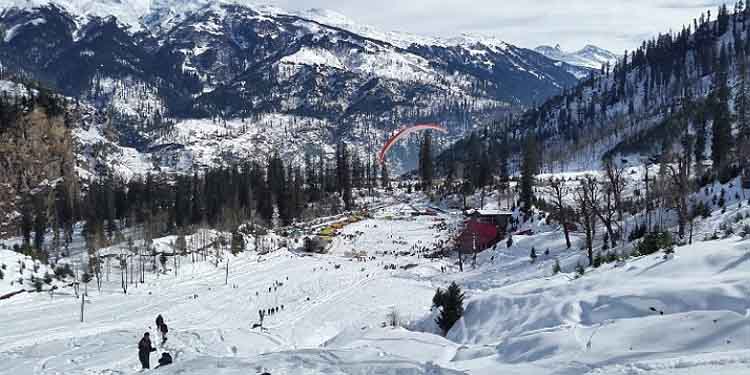
The valley of gods, as the Kullu valley has come to be known, is perhaps the most delightful region in the western Himalayas. The ancient Hindus regarded it as the furthest limit of human habitation - Kulantapitha, and its original name finds mention in the epics, the Ramayana and the Mahabharata as well as Vishnu Purana. Like a slender delicate-hued fern glistening in the morning dew, the valley spreads out its charm on either side of upper reaches of the river Beas. Running north to south, the main river valley is only 80 km long and 2 km at its broadest, yet a fairly wide area is open to the visitors to enjoy the spectacle of variegated mountain scenery. In the spring Kullu is at its most colourful with pink blossoms and white flowers while the higher slopes are aglow with gorgeous rhododendrons. With utumn, clear blue skies return and fields and forests alike show wonderful tints of crimson and ochre. By December, there is no greenery except the majestic pines and cedars in the forests. In winter the hillsides are flanked in white. Situated on the banks of the Beas, Kullu, the headquarters of the district, serves as a nerve centre of the valley and is the starting place for a number of treks. The deodar-fringed grassy maidan, Dhalpur, is a stage for many colourful fairs.
Palampur
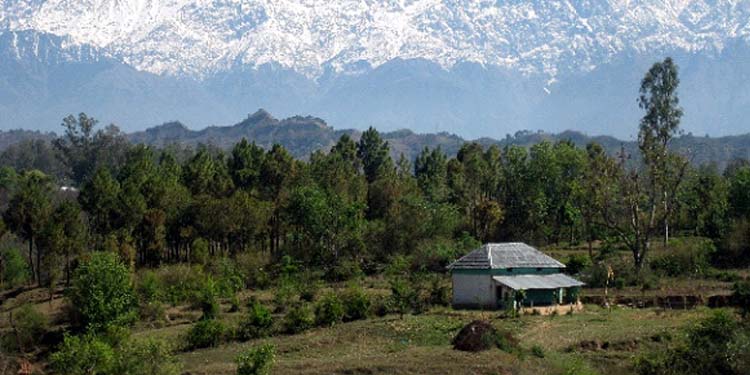
The Kangra valley, of which Palampur (1249 m) is a major station, was the 'Trigarta' of old. It was one of the leading hill states and was once a part of the kingdom of Jalandhara.In local parlance, the word for 'lots of water' is 'pulum'. This is what has given Palampur its name and it is water that has given the valley so much of its character. Countless streams and brooks criss-cross the landscape and in their intricate mesh, are tea gardens and rice paddies. The town came into being when the tea bush was introduced in the 19th century - and Palampur became a focus of planters. Kangra tea, with its centre at Palampur, has been internationally acclaimed since then. To further bless the area with remarkable natural beauty, the Dhauladhar ranges rise dramatically from the earth, just beyond Palampur. The town itself has some interesting colonial architecture and the area around is richly garnished with historical temples and forts - and scores of picturesque hamlets.
Dharamsala
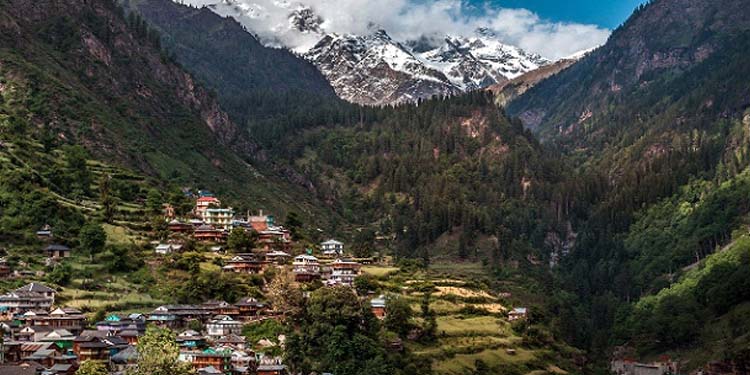
Dharamsala is the main hill station in the Kangra Valley - a fertile, undulating valley, lying between the gentle Shivalik Hills and the foothills of the mighty Dhauladhars - a valley noted for the beauty of its scenery - lush terraces, wooded hills, manicured tea gardens and sparkling streams. The Dhauladhars, "the white mountains" that rise 4,000 m above the valley floor, provide a dramatic backdrop. Picturesque Dharamsala, built on a spur of the Dhauladhars range, commands splendid view of the surrounding country. Originally a little hill resort built by the British, Dharamsala rambles up in levels to very near the snow line. While Lower Dharamsala (1,250 m) is the busy commercial area with government buildings, the bazar and the bus stand, Upper Dharamsala (1,982 m) has suburbs with evocative names like Forsythganj and Macleodganj that are quite fascinating.
Kangra
The remains of the fort of the rulers of Kangra are located on a strategic height, overlooking the 'Ban Ganga' and 'Manjhi' rivers. A saying goes, "He who holds the fort, holds the Kangra" that is why many invaders sacked it. It once used to be the seat of power of Katoch Rajas. Inaccessible cliffs surround the fort on three sides. Once it was an imposing structure of stone. In its highest part were the residences and temples of the old Katoch Kings.
Dalhousie
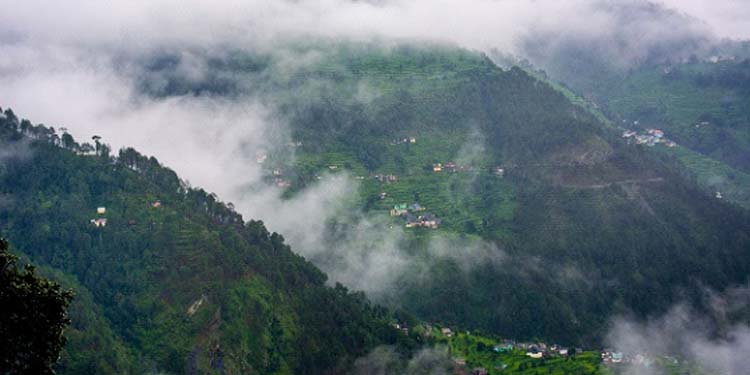
Blessed with some of the most spectacular and beautiful landscapes anywhere, it is a travellers paradise -lofty snow peaks, deep gorges, lush green valleys, fast flowing rivers, enchanting mountain lakes, flower bedecked meadows, beautiful temples and monasteries steeped in time. May it be for relaxing, sightseeing, trekking, mountaineering, fishing, para-gliding, skiing, ice skating and golf, Himachal has it all...Come Explore Himachal with himachal tourist... Set amidst thickly wooded hills, clothed in deodar and pine, Dalhousie has marvelous forest trails and picnic spots with splendid vistas over the Chamba Valley. A touch of the "Raj" still lingers in the little unspool town.
Chamba
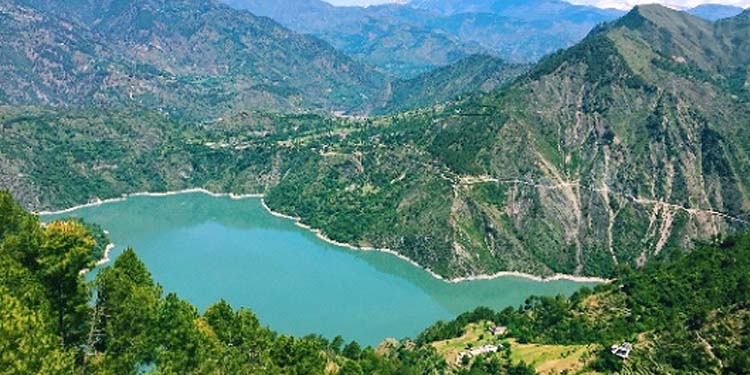
In the higher reaches of the Ravi Valley, just 56 km from Dalhousie, Chamba is perched on a little plateau about 100 m above the river. The capital of an ancient kingdom, Chamba was founded in 920 AD by Raja Sahil Varma who named it after his favorite daughter Champavati. Isolated in this valley by the high ranges, Chamba developed its own style of architecture and art. Much of this heritage has been preserved and Chamba is known for the elegance of its temples and for its exquisite miniatures and handicrafts.
Lahul-Spiti
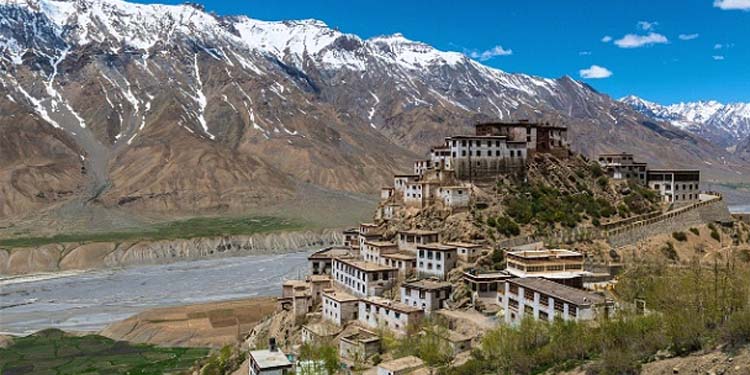
Lahul-Spiti became the district of Himachal Pradesh in 1960 and is one of the frontier districts of India. It is 120 km. away from Manali and has snow fed glaciers and barren mountains. Keylong is the headquarter of Lahaul-Spiti and oasis of green fields. The two valleys at Lahaul and Spiti have a tenous link over the Kunzam Pass (4,520 metres ). The two twin valleys, Lahaul and Spiti in the North-Eastern corner of Himachal, protected by distance is a region of nature at its wildest which has lent it much enchantment. The threshold of one of the Lahaul plateau is nourished by the Chandra and Bhaga rivers and is surrounded by high mountains on all sides, the Great Himalayas to the North, the Pir Panjal to the South and the Spiti and Chandra watershed to the East. Lahaul has curious mixture of Buddhist and Hinduism. There are a number of Monasteries and Temples.
Mini Himachal 06 Nights/07 Days = Shimla-2Night Manali-3Night Chandigarh – 1Night
Day 01: Delhi/Chandigarh to Shimla (Delhi-Shimla 345Kms/8HrsDrive) (Chandigarh-Shimla 125Kms/4HrsDrive)
Arrive Delhi /Chandigarh and transfer by road to Shimla, the former summer capital of British India, set amidst the snow-capped Shivalik Mountains which offers some of the most stunning views of the mighty Himalayas. Arrive & check in hotel. Rest of the day free at leisure. Stay overnight at pre-booked Hotel.
Day 02: Shimla - Kufri – Shimla / Sightseeing
This morning you will visit Kufri situated at an altitude of 2500 meters just an hour’s drive from Shimla. Later this afternoon take a walking tour of Shimla, visit the Jakhoo hills that offer a panoramic view of the town visit the Vice Regal Lodge and walk down the Mall Road. Stay overnight at Shimla Hotel.
Day 03: Shimla to Manali via Kullu (275 Kms / 7-8Hrs)
Today you will proceed by road to Manali a picture-perfect hill resort at an altitude of 1,929 meters. Set amidst pine-clad mountains, which gradually close in on both sides of the Beas and nestling in their shade, as though carved out of primeval forest, is a scattered hamlet, which comprises this picturesque resort. En-route visit Hangori Mata Temple, Pandoh Dam, and Kullu Valley etc. Arrive & check in at pre-booked hotel. Rest of the day free at leisure. Stay overnight at Manali.
Day 04: Manali
This morning you may take a Local tour of Manali, visiting the 450 years old temple dedicated to Hadimba Devi, which has some excellent woodcarving. You also visit the Tibetan Monastery, Van Viharika, Mall Road and the handicraft center. The rest of the day at leisure OR walk to the nearby picturesque village of Vashisht known for its hot sulphur springs. Stay overnight at Manali.
Day 05: Manali – Rohtaang Pass (Own Cost) with Solang Valley (Snow Point)
This morning you visit the Solang Valley and the not to be missed Rohtaang Pass (If open at that time), 51 km from Manali at an altitude of 3978 meters (subject to weather conditions). On the way you will enjoy Gulaba and Water Fall in evening back to Manali and Overnight stay at Manali.
Day 06: Manali to Chandigarh (274 Kms/7-8Hrs)
In the morning after breakfast check-out from the hotel and drive to Chandigarh on arrival check-in pre- booked hotel O/N at Chandigarh.
Day 07: Chandigarh to Delhi or Fly from Chandigarh
In the morning after breakfast check-out from the hotel and go for sightseeing of Chandigarh visit Rock garden, Rose garden and Sukhna Lake then drive to Delhi. On arrival drop at Railway station/Airport for return journey with sweet memories of your tour.
BEST of Himachal 09 Nights/10 Days
Shimla-2Nts Manali-3Nts Dharamshala–1Ngt Dalhousie 2Ngts – Amritsar 1Ngt
Day 01: Delhi/Chandigarh to Shimla (Delhi-Shimla 345Kms/8HrsDrive) (Chandigarh-Shimla 125Kms/4HrsDrive)
Arrive Delhi /Chandigarh and transfer by road to Shimla, the former summer capital of British India, set amidst the snow-capped Shivalik Mountains which offers some of the most stunning views of the mighty Himalayas. Arrive & check in hotel. Rest of the day free at leisure. Stay overnight at pre-booked Hotel.
Day 02: Shimla - Kufri – Shimla / Sightseeing
This morning you will visit Kufri situated at an altitude of 2500 meters just an hour’s drive from Shimla. Later this afternoon take a walking tour of Shimla, visit the Jakhoo hills that offer a panoramic view of the town visit the Vice Regal Lodge and walk down the Mall Road. Stay overnight at Shimla Hotel.
Day 03: Shimla to Manali via Kullu (275 Kms / 7-8Hrs)
Today you will proceed by road to Manali a picture-perfect hill resort at an altitude of 1,929 meters. Set amidst pine-clad mountains, which gradually close in on both sides of the Beas and nestling in their shade, as though carved out of primeval forest, is a scattered hamlet, which comprises this picturesque resort. En-route visit Hangori Mata Temple, Pandoh Dam, and Kullu Valley etc. Arrive & check in at pre-booked hotel. Rest of the day free at leisure. Stay overnight at Manali.
Day 04: Manali
This morning you may take a Local tour of Manali, visiting the 450 years old temple dedicated to Hadimba Devi, which has some excellent woodcarving. You also visit the Tibetan Monastery, Van Viharika, Mall Road and the handicraft center. The rest of the day at leisure OR walk to the nearby picturesque village of Vashisht known for its hot sulphur springs. Stay overnight at Manali.
Day 05: Manali – Rohtaang Pass (Own Cost) with Solang Valley (Snow Point)
This morning you visit the Solang Valley and the not to be missed Rohtaang Pass (If open at that time), 51 km from Manali at an altitude of 3978 meters (subject to weather conditions). On the way you will enjoy Gulaba and Water Fall in evening back to Manali and Overnight stay at Manali.
Day 06: Manali to Dharamshala (260 Kms/7-8Hrs)
Checkout & Proceed to Dharamshala. En-routePalampur famous For Tea Garden. Dharamshala is a hill-station lying on the spur of the Dhauladhar Mountains about 18 Kms north-east of Kangra, It is known for its scenic beauty set amidst high pine and oak trees. Since 1959, when it became the temporary headquarters & Abode of His Holiness the Dalai Lama, Dharamshala has risen to international repute as “The Little Lhasa in India”. O/N Hotel
Day 07:- Dharamshala – Dalhousie (120 Kms/4-5Hrs)
After Breakfast drive from Dharamshala towards Dalhousie after doing the local sightseeing of Places which includes, His holiness Dalai lama residence &Tsugalkhang at Mc Leodgunj, St. john’s church in the wilderness (Built in 1853),War memorial, Bhagsunath temple and Dal Lake, Norbulingka, GyutoRameda Tantric Monastery. Reach Dalhousie in the evening. O/N Hotel
Day 08:- Dalhousie
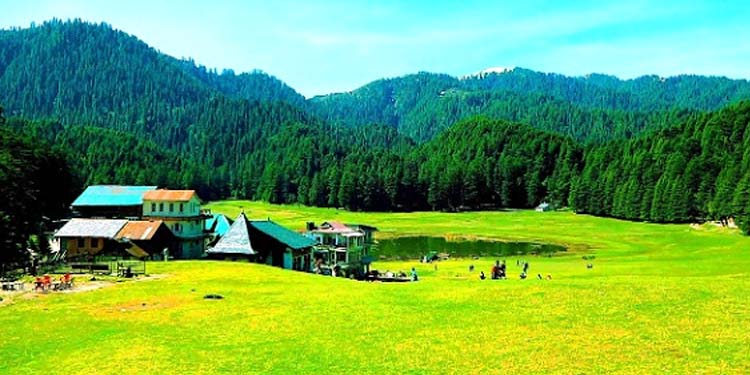
Dalhousie has been named after the British Governor - General of the l9th century, Lord Dalhousie. Surrounded by varied vegetation - pines, dodders, oaks and flowering rhododendron. Local sightseeing of Dalhousie includes visit to Panjpula, Subhash Baoli and excursion to Khajjiar 24 km fro Dalhousie surrounded by thick Deodar forest. Drive from Dalhousie to Khajjiar is awesome. O/N Hotel
Day 09:- Dalhousie to Amritsar (210 Kms/4-5Hrs)
Check out from the hotel and drive to Amritsar around 03 hours ‘drive. On arrival visit Wagah border, border of India & Pakistan later visit Golden Temple after that check in hotel in O/N Amritsar.
Day 10: Amritsar to Delhi (9-10Hrs Drive) Or Fly from Amritsar
Checkout & drop at Railway station/Airport for return journey with sweet memories of your tour.