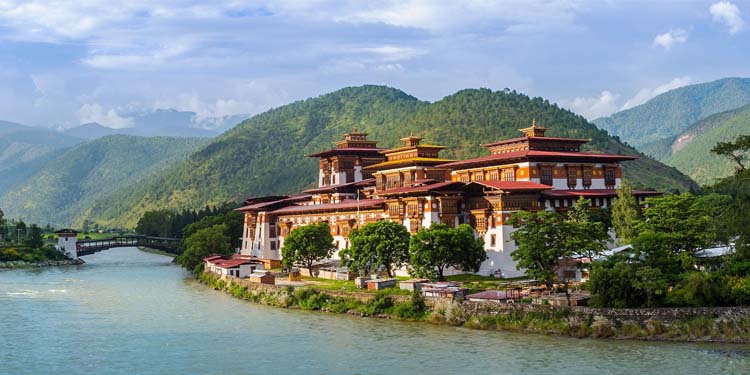
Bhutan, a Buddhist kingdom on the Himalayas’ eastern edge, is known for its monasteries, fortresses (or dzongs) and dramatic landscapes that range from subtropical plains to steep mountains and valleys. In the High Himalayas, peaks such as 7,326m Jomolhari are popular trekking destinations. Paro Taktsang monastery (also known as Tiger’s Nest) clings to cliffs above the forested Paro Valley. Bhutan is a tiny and remote kingdom nestling in the Himalayas between its powerful neighbours, India and China. Almost completely cut off for centuries, it has tried to let in some aspects of the outside world while fiercely guarding its ancient traditions. The Bhutanese name for Bhutan, Druk Yul, means "Land of the Thunder Dragon" and it only began to open up to outsiders in the 1970s. The Wangchuck hereditary monarchy has wielded power since 1907. But Bhutan became a two-party parliamentary democracy after elections in March 2008.
Kingdom of Bhutan
Capital: Thimphu
- Population 750,000
- Area 38,364 sq km (14,812 sq miles)
- Major language Dzongkha
- Major religions Buddhism (official), Hinduism
- Currency Ngultrum
When to visit Bhutan & when not to
A month by month Guide to visit Bhutan
The summer months – June, July and August – are monsoon season in Bhutan: The summer months – June, July and August – are monsoon season in Bhutan; a time of very heavy rain when, over three months, half a metre of rain falls in Thimphu, up to a metre falls in the eastern hills, and the mountains become obscured by thick cloud. A consideration that may help you brave the weather or not is Bhutan’s calendar of tshechus and events: there are none, or very few tshechus held during January, February, June, July and August.
If you are planning a last-minute holiday, be aware that the peak months of September, October and November are the busiest, and flights may be booked up far in advance –
to see Bhutan in glorious autumnal colours, it’s best to book early.
March and April are a wonderful time to see Bhutan in bloom. Temperatures are pleasant and the valleys are bursting with nature.
Although May brings higher humidity, this attracts fewer visitors, so prices as well as crowd numbers are lower. The rhododendrons are still in bloom too, making this a picture-perfect time for photographers and nature lovers.
December is a cold month in Bhutan, but the skies are blissfully crisp and clear and the valleys are sunny with far-reaching views across the Himalayas – well worth it for those who can brave the chill.
Bumthang
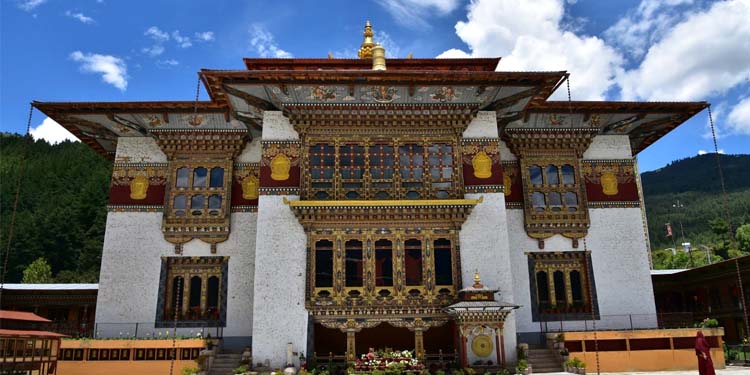
A major producer of apples, Bumthang offers a bit more of a cultural bite than its quieter neighbour, Ura. Shrouded in religious legend of mystery illness and miracle cures, Bumthang is home to some of the country’s oldest temples, monasteries and landmarks. The ‘Burning Lake’ is a sacred site of pilgrimage where it’s said the sin-free amongst us are able to distinguish an extraordinary sight.
Jakar
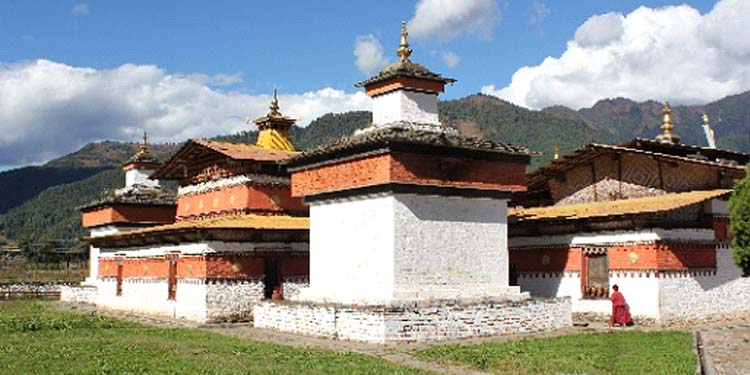
Jakar is only a one-street town, but it’s the Chamkhar Valley’s trading centre and it shows: simple shacks selling vegetables are replaced here with shops marked by hand painted signage identifying ‘general store’ from ‘restaurant’ and even ‘internet café’. Nonetheless, it’s a great base for easy day trekking to nearby monasteries and is recognised for its distinctive, brightly coloured wool items called yethra.
Paro
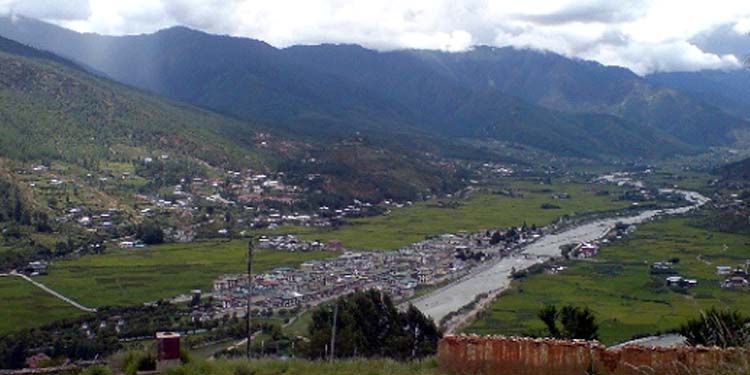
Home of red rice, the National Museum and the country’s only airport, Paro is ideal to explore on foot. It’s biggest draw? The Rinpung Dzong, a distinctive fortress characterised by huge buttressed walls that peer over the town and are visible throughout the valley. Paro’s ‘high street’ was only built in 1985 and is a concrete-free blend of brightly decorated independent restaurants and shops… for now.
Phobjikha
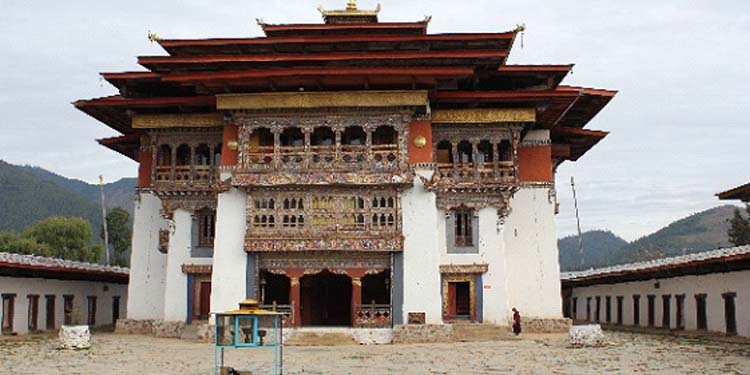
Phobjikha, known also as Gangtey, is a glacial valley that’s snowbound during the winter months when most of its residents up sticks and head to warmer Wangdue. In their place come hundreds of black-necked cranes that, if you’re lucky, come so close that they circle you in the sky. The whole area is a hugely important wildlife preserve, home to muntjacs, wild boar, sambar, Himalayan black bears and leopards, too.
Punakha
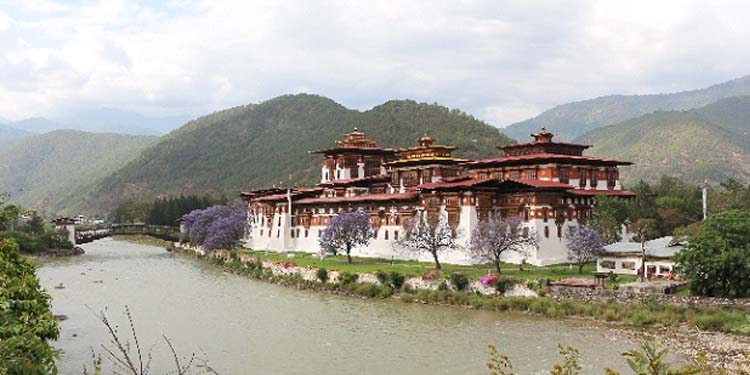
Bhutan’s winter capital, Punakha is lower and warmer than Thimpu and is marked proudly by Punakha Dzong, the second largest, but doubtless most impressive dzong in the country. The dzong sits at the confluence of the Pho Chuu and Mo Chuu rivers and is testament to Bhutan’s commitment to traditional skills having been rebuilt sympathetically after much of it was destroyed by fire in 1998.
Takung Valley
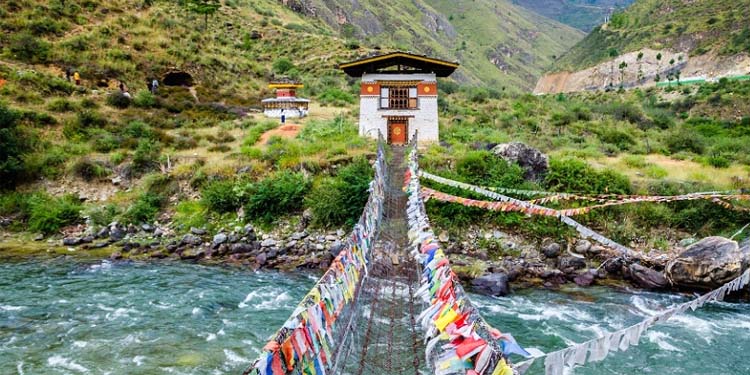
Central Bhutan gives you a break from mountain-top temples and a chance to breath in the country’s incredible countryside: a land of lush meadows, blue pine forests and bamboo groves. The Takung Valley, a popular camping spot on the descent from Bhutan’s 3,465m Phephe-la Pass, is a beautiful forested area interspersed with clearings where animals graze freely and cultivated land for herders huts.
Taktsang Palphug
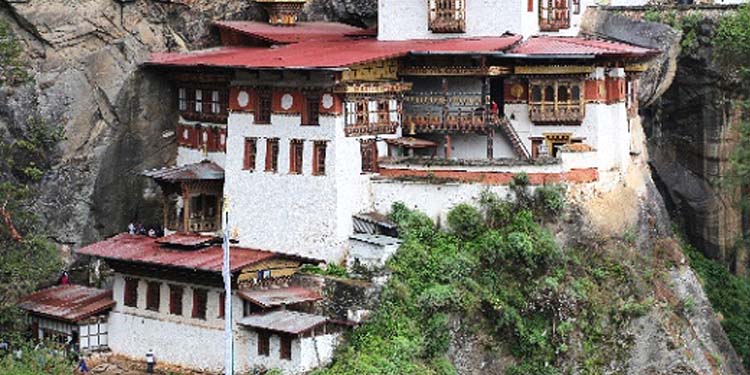
It’s said that Guru Rinpoche, the founder of Buddhism in Bhutan, arrived at the Taktsang Palphug monastery on the back of a winged tigress and meditated there for three months straight, hence its more pronounceable moniker, Tiger’s Nest. Skipping this is like forgetting to see the Taj Mahal in Agra; whether you thrive on culture, or get your kicks from climbing, you simply have to go.
Thimphu
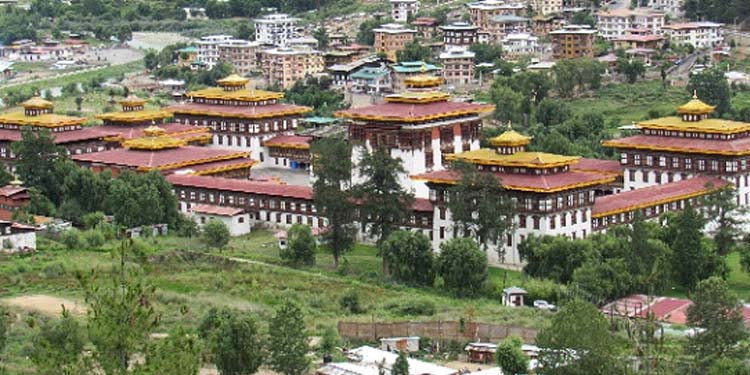
Thimphu is a contradiction: it upholds Bhutan’s overriding sense of purity – it’s the only world capital without traffic lights, a modern trapping removed because residents thought them impersonal – but it also has a challenging exuberance that’s seen a few nightclubs spring up. Temples, dzongs, museums and parks – Thimphu has it all, a vibrant introduction to the most advanced and the most remote parts of the kingdom.
Trongsa
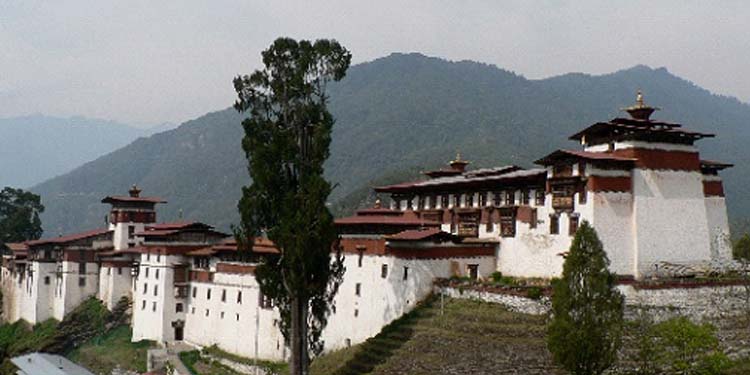
The Trongsa passes are reached via an ancient route where once both monks and mules trod their weary way through conifer forests. Trongsa itself is best known for two things: Trongsa Dzong, the red-roofed ancestral home of the Royal Family, and the Jhambay Lhakang Festival, where locals run underneath a huge flaming gate while piles of burning grass fall on their heads. Playing with fire, literally.
Ura
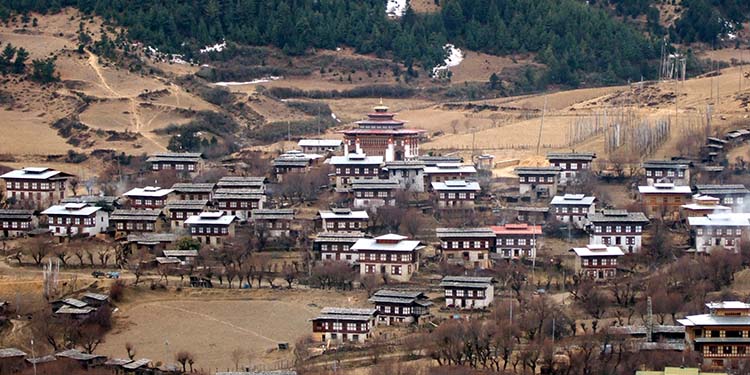
A visit to Ura is like opening the door to the past and then some. It has grown in prosperity since the country’s East-West highway finally reached it in the 1990s, but the village is almost medieval in its makeup: think narrow stone roads and houses with wooden shingle roofs. Don’t expect gastronomic greatness, the land is less than fertile and the locals live on a staple diet of potatoes and yak meat.
Wangdue Phodrang
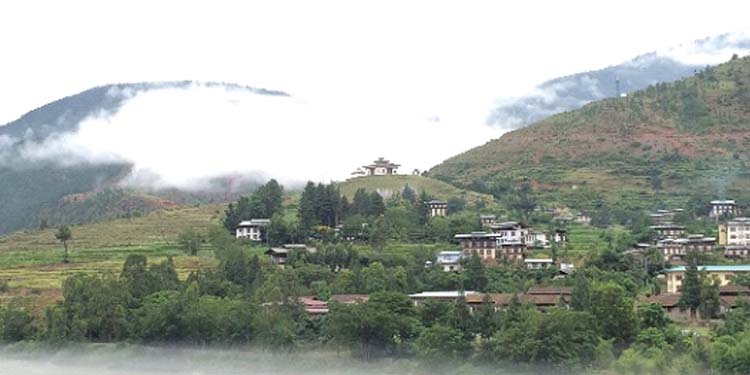
A windswept market town in one of Bhutan’s biggest and most climatically varied districts, Wangdue Phodrang is known for its bamboo products, slate and stone carvings. Since fire destroyed its dzong in June 2012, attention on the town has turned towards its local famers’ market: a long line of well-kept wooden shacks, their corrugated roofs secured by stones, selling baskets of brilliantly-coloured local produce.
The following times give you a rough idea of the driving times between the main attractions in Bhutan.
- Driving times by car in Bhutan
- Thimphu - Paro (54km): 2 hours
- Thimphu - Wangdue Phodrang (70km): 2 hours
- Thimphu - Punakha (76km): 3 hours
- Trongsa - Bumthang (68km): 3 hours
- Phobjikha (Gangtey) - Jakar (127km): 4 hours 30 mins
- Wangdue Phodrang - Trongsa (129km): 5 hours
- Punakha - Trongsa (129km): 5 hours 15 mins
Bhutan (Thimphu 2N – Wangdue / Punakha 2N – Paro 2N) - (6 Nights / 7 Days)
Day 01: Paro Airport – Thimphu
(Distance: 65 kms. / Driving Time: 2 hrs. / Altitude of Thimphu: 2350 mts.) Meet & Greet on arrival at Paro Airport and transfer to Thimphu (7,710 ft.) the capital city of Bhutan. On arrival check in at the hotel. Evening explore the Thimpu town by walk. Overnight stay at Thimphu.
Day 02: Thimphu Sightseeing
After breakfast visit Kuensel Phodrang (Buddha Statue) a place for refreshing with a huge statue of Buddha on the top of the Kuensel Phodrang, National Memorial Chorten (Monument) & Folk Heritage Museum. Afternoon visit Sangaygang View Point, Changangkha Monastery, Takin Preserve Centre, the national animal of Bhutan can be seen here. In the evening visit Tashichho Dzong (Fortress of the Glorious Religion). Overnight stay at Thimphu.
Day 03: Thimphu – Punakha/Wangdue Sightseeing
(Distance: 77 kms. / Driving Time: 3 hrs. / Altitude of Punakha: 1310 mts.)
After breakfast drive to Punakha (4298 ft.)/ Wangdue, On the way Stop at Dochu-La-Pass (3150 mts.). to view the higher Himalayas. Arrival at Punakha check in at hotel. After noon visit Punakha Dzong - built in 1637 by Zhabdrung Ngawang Namgyal. For many years until the time of the second king, it served as the seat of the Government. The Dzong was named Druk Pungthang Dechen Phodrang (Palace of Great Happiness). Punakha is still the winter residence of Je-Khenpo and King Jigme Dorji Wangchuck convened the first National Assembly here in 1952. After that take a short and easy hike to visit the Chhimi Lhakhang - The Temple, also known as “The Temple of Fertility” was built by Lama Drukpa Kuenley, “The Devine Mad Man”. Evening free for leisure. Overnight stay at Punakha / Wangdue.
Day 04: Excursion to Gangtey (Phobjikha) OR Punakha Sightseeing
(Excursion to Gangtey - Distance: 78 kms. One way / Driving Time: 3 hrs.)
After breakfast, start for full day excursion trip to Gangtey (9,840 ft.). Gangtey is the home of Black Necked Crane which migrates from the arid plains of Tibet in the north. It is a beautiful valley of Bhutan. You can also visit Gangtey Gompha. Evening return back. Overnight stay at Punakha / Wangdue.
Alternatively, instead of going to Gangtey (Phobjikha), you also have an option spending the day in Punakha Valley itself. After breakfast hike Khamsum Yuelley Namgyal Chorten which is about 45 Mins easy hike to the top of the hill. It offers a breathtaking view of the Punakha Valley. Also visit Punakha Suspension Bridge and Sangchhen Dorji Lhuendrup Nunnery. Rest of the day free for leisure. Overnight stay at Punakha / Wangdue.
Day 05: Punakha/Wangdue – Paro Sightseeing
(Distance: 140 kms. / Driving Time: 5 hrs. / Altitude of Paro: 2280 mts.)
After breakfast drive to Paro (7,483 ft.). On the way stop at Lamperi to visit Royal Botanical Park. On arrival check in at the hotel. Afternoon visit Ta Dzong - National Museum with an excellent collection of arts, relics, religious thangkha, etc. Rinpung Dzong - Meaning "fortress of the heap of jewels". The dzong now serves as the administrative and judicial seat of Paro. Evening free for leisure. Overnight stay at Paro.
Day 06: Paro Sightseeing
After breakfast hike to the famous Taktsang Monastery - called “Tiger’s Nest” (2hrs hike from the base camp). Later visit Drukgyel Dzong & Kyichu Monastery. Overnight stay at Paro.
Day 07: Paro Airport
After breakfast check out from hotel and drop at Paro Airport for your onward journey.
Explore Bhutan (Thimphu 2N – Wangdue / Punakha 2N – Bumthang 3N – Paro 3N) (10 Nights / 11 Days)
Day 01: Paro Airport – Thimphu
(Distance: 65 kms. / Driving Time: 2 hrs. / Altitude of Thimphu: 2350 mts.)
Meet & Greet on arrival at Paro Airport and transfer to Thimphu (7,710 ft.) the capital city of Bhutan. On arrival check in at the hotel. Evening explore the Thimpu town by walk. Overnight stay at Thimphu.
Day 02: Thimphu Sightseeing
After breakfast visit Kuensel Phodrang (Buddha Statue) a place for refreshing with a huge statue of Buddha on the top of the Kuensel Phodrang, National Memorial Chorten (Monument) & Folk Heritage Museum. Afternoon visit Sangaygang View Point, Changangkha Monastery, Takin Preserve Centre, the national animal of Bhutan can be seen here. In the evening visit Tashichho Dzong (Fortress of the Glorious Religion). Overnight stay at Thimphu.
Day 03: Thimphu – Punakha/Wangdue Sightseeing
(Distance: 77 kms. / Driving Time: 3 hrs. / Altitude of Punakha: 1310 mts.)
After breakfast drive to Punakha / Wangdue, On the way Stop at Dochu-La-Pass (3150 mts.). to view the higher Himalayas. Arrival at Punakha check in at hotel. After noon visit Punakha Dzong - built in 1637 by Zhabdrung Ngawang Namgyal. For many years until the time of the second king, it served as the seat of the Government. The Dzong was named Druk Pungthang Dechen Phodrang (Palace of Great Happiness). Punakha is still the winter residence of Je-Khenpo and King Jigme Dorji Wangchuck convened the first National Assembly here in 1952. After that take a short and easy hike to visit the Chhimi Lhakhang - The Temple, also known as “The Temple of Fertility” was built by Lama Drukpa Kuenley, “The Devine Mad Man”. Evening free for leisure. Overnight stay at Punakha / Wangdue.
Day 04: Punakha – Bumthang
(Distance: 212 kms. / Driving Time: 8 hrs. / Altitude of Bumthang: 2600 mts.)
After breakfast check out from hotel and drive to Trongsa across Pele-La-Pass (11.120 ft.) traditional boundary between east & west Bhutan, there is an adrupt change in vegetation, with mountain forest replaced by high altitude dwarf bamboo. Stop Enroute Chendbji Chorten - built in the style of the great Bodhanath Choten of Nepal. Further ahead visit Trongsa Dzong – It was the seat of power over central & eastern Bhutan and Ta Dzong - An ancient watch tower. The chapel inside is said to be dedicated to the Trongsa Penlop Jigme Namgyal. Then drive further to Bumthang over the Yutong-La-Pass (11,155 ft.). While in Chumey valley in Bumthang, visit the Yathra Weaving Factory - It is the most famous textile product of Bumthang. On arrival check in at the hotel. Overnight stay at Bumthang.
* Please note that the road condition after Punakha/Wangdue is poor due to road widening work going on. Travel time may be more than the standard time mentioned above.
Day 05: Bumthang Sightseeing
After breakfast, 1st half visit Jakar Dzong: Literally meaning the Castle of White Bird. The current structure was built in 1667. Lamey Goemba: A large palace and monastery built in 18th century by Dasho Phuntsho Wangdi Jambay Lhakhang: built by King Srongsen Gampo of Tibet. In October one of the most spectacular festival, “Jambay Lhakhang Drup” is staged here. Chakhar Lhakhang: Literally meaning the Iron Castle, the original palace was made of Iron and hence the name “Chakhar”. Kurjey Lhakhang: Named after body print of Guru Rimpoche. Afternoon 2nd half Visit Tamshing Lhakhang: Literally meaning the Temple of the good message, established in 1501 by Pema Lingpa. Membarstho: Literally meaning, “The burning Lake”. The evening ends visit a local handloom weaving house and Interact with the weavers. Overnight stay at Bumthang.
Day 06: Excursion to Ura Village
(Distance: 54 kms. One way / Driving Time: 3 hrs. / Altitude of Bumthang: 2600 mts.)
After breakfast start for excursion to Ura village and visit the new Ura monastery. On the way visit the Mebartso - The burning lake. Stroll around the village and return back to hotel. Evening walk to the Swiss farm where apple juice, cider, cheese etc are made. Overnight stay at Bumthang (8530 ft.).
Day 07: Bumthang – Punakha / Wangdue
(Distance: 212 kms. / Driving Time: 8 hrs. / Altitude of Punakha: 1310 mts.)
After breakfast drive to Punakha (4298 ft.). Reach Punakha by late afternoon. On arrival check in at the hotel. Overnight stay at Punakha/Wangdue.
Day 08: Punakha/Wangdue – Paro Sightseeing
(Distance: 140 kms. / Driving Time: 5 hrs. / Altitude of Paro: 2280 mts.)
After breakfast drive to Paro (7,483 ft.). On the way stop at Lamperi to visit Royal Botanical Park. On arrival check in at the hotel. Afternoon visit Ta Dzong - National Museum with an excellent collection of arts, relics, religious thangkha, etc. Rinpung Dzong - Meaning "fortress of the heap of jewels". The dzong now serves as the administrative and judicial seat of Paro. Evening free for leisure. Overnight stay at Paro.
Day 09: Paro Sightseeing
After breakfast hike to the famous Taktsang Monastery - called “Tiger’s Nest” (2hrs hike from the base camp). Later visit Drukgyel Dzong & Kyichu Monastery. Overnight stay at Paro.
Day 10: Excursion to Chele-La-Pass
(Distance: 35 kms. One way / Driving Time: 2 hrs. / Altitude of Chele-La-Pass: 3810 mts.)
After breakfast excursion trip to Chele-La-Pass (13,088 ft.) – the highest motorable road in Bhutan. Enjoy the scenic beauty & memorable landscapes from Chele-La-Pass. Back to Paro. Rest of the day is free for leisure. Overnight stay at Paro.
Day 11: Paro Airport
After breakfast check out from hotel and drop at Paro Airport for your onward journey.